Different Milling Techniques– Modern and Traditional Mills Rice has stayed the staple food to the greater part the humankind since days of yore notwithstanding influxes of food upsets. Covered by two unique layers, to be specific grain (the internal layer) and husk (external layer), Rice paddy becomes rice just when the two layers are eliminated appropriately through hulling and processing of paddy and thus handling of rice can be named as the hulling and processing proportion. Creation wise India has ascended to turn into the second biggest maker of rice on the planet (21% of worldwide rice creation), next just to China. The development of populace applies more strain pushing for higher efficiency of harvests while a bigger amount of food grain keeps on being lost because of wasteful processing processes in the country. In this way, it requires a superior handling strategy of rice to forestall handling misfortune. For the most part, rice portions are frequently defenseless to br...
Source: Nextech Solutions
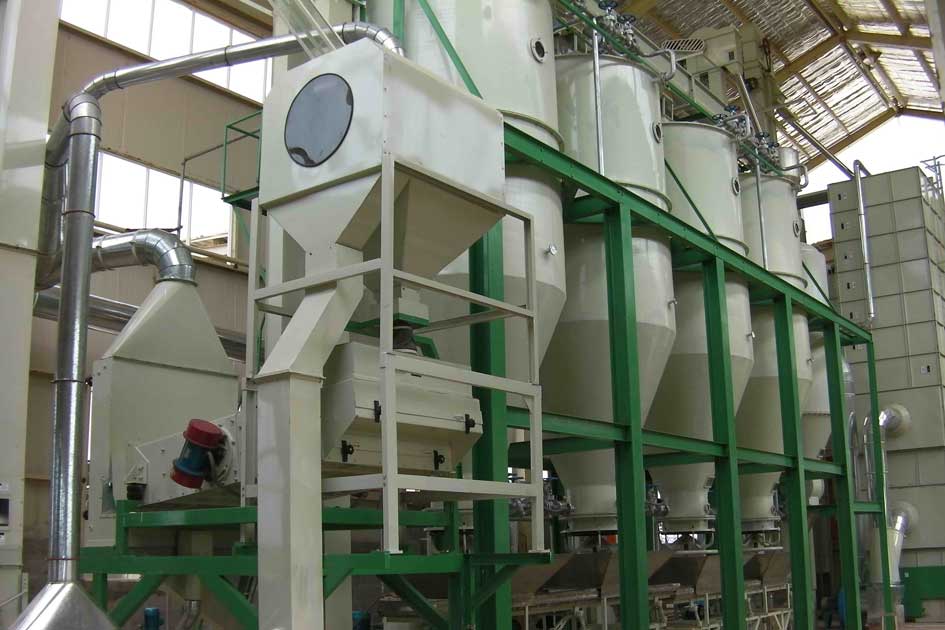
Setting up auto rice milling is a term that signifies the whole action of rice processing from cultivating to yielding the final eatable product. A plant/industrial setup which is capable of pulling off this huge task is known as an Auto Rice Milling Plant. Such a plant comprises of four sections:
- Parboiling Section
The parboiling section is responsible for the conditioning of rice crops by partially cooking and drying it beforehand. The parboiling of rice crops makes it hard enough to withstand the process of rice milling. Parboiling is also responsible for getting rid of the hull that comes along with the crop. Once the hull is taken care of, water is run through the rice to wash it away.
Parboiling can be-be practiced a number of times before processing the rice crop further. There are single-stage, double stage, and triple-stage parboiling systems available to ensure good conditioning of the crop.
- Drying Section
The drying section of an Auto Rice Mill Plant is responsible for drying the parboiled rice crop and minimizing the moisture content in the rice. Drying of seeds is crucial since it ensures the durability of the rice and its good quality.
Moisture content in rice results in fungi and several pathogens infecting the crop. These insects and pathogens degrade the quality of the rice severely and make it unfit for consumption. Effect of drying of rice is so great that if moisture content is lowered than 14% even by 1%, the seed life gets doubled. Once a batch is properly dried, it is ready for further operations.
- Milling Section
Rice Milling is one of the most important parts of Rice Processing. The basic objective of rice milling is to remove the unwanted part/ non-eatable part of the rice. The husk and the bran layers are removed in this stage of rice processing. Over the course of this process, all the impurities are removed to obtain an edible and white rice.
The usual composition of a typical rice crop on harvesting is 20% hull or husk, 11% bran layers and 69 % starchy endosperm. We do not need anything other than starchy endosperm to consume, rest is removed during the processing of rice.
- Bagging Section
Once we get over with Rice Milling, we have pure consumable rice left with us. This rice needs to be packed in order to make it last longer and facilitate the transportation of rice from one place to another.
The rice bagging section is where all the packaging takes place with the help of bagging machines. The rice bagging must keep the rice safe from external factors like humidity, pressure, and temperature.
When a batch of rice is eventually processed through all of the mentioned sections, auto rice milling is accomplished.
Contact Nextech Solutions a leading rice mill consultant in India, they will surely help you in Setting Up Auto Rice Milling Plant.
Checkout Our Other Popular Blogs:
- Optimize Rice Mill Plant For Better Efficiency
- Rice Mill Plan
- Modern Rice Mills Are Important Here's Why
- Expansion And Growth Of Rice Processing Plant
Source: https://www.nextechagrisolutions.com/blog/auto-rice-milling-plant-and-its-components/
Comments
Post a Comment